We are nearing the end of our PA-SHARE 2.0 investment, but we still have a number of enhancements and improvements to share with you all! The biggest feature coming out of our most recent release cycle is the new PA-SHARE SearchLite application.
Keep reading to learn more about SearchLite and other enhancements!
SearchLite
SearchLite was developed to provide easier access to resource and report information—there is no login process required to access SearchLite. It is mobile friendly, includes a light and dark mode, and allows you to build a simple search to access either Resource or Report information.
When searching for a resource, you can search by county/municipality, keywords (including resource name, address and PA-SHARE Resource #), architectural styles, and/or eligibility.
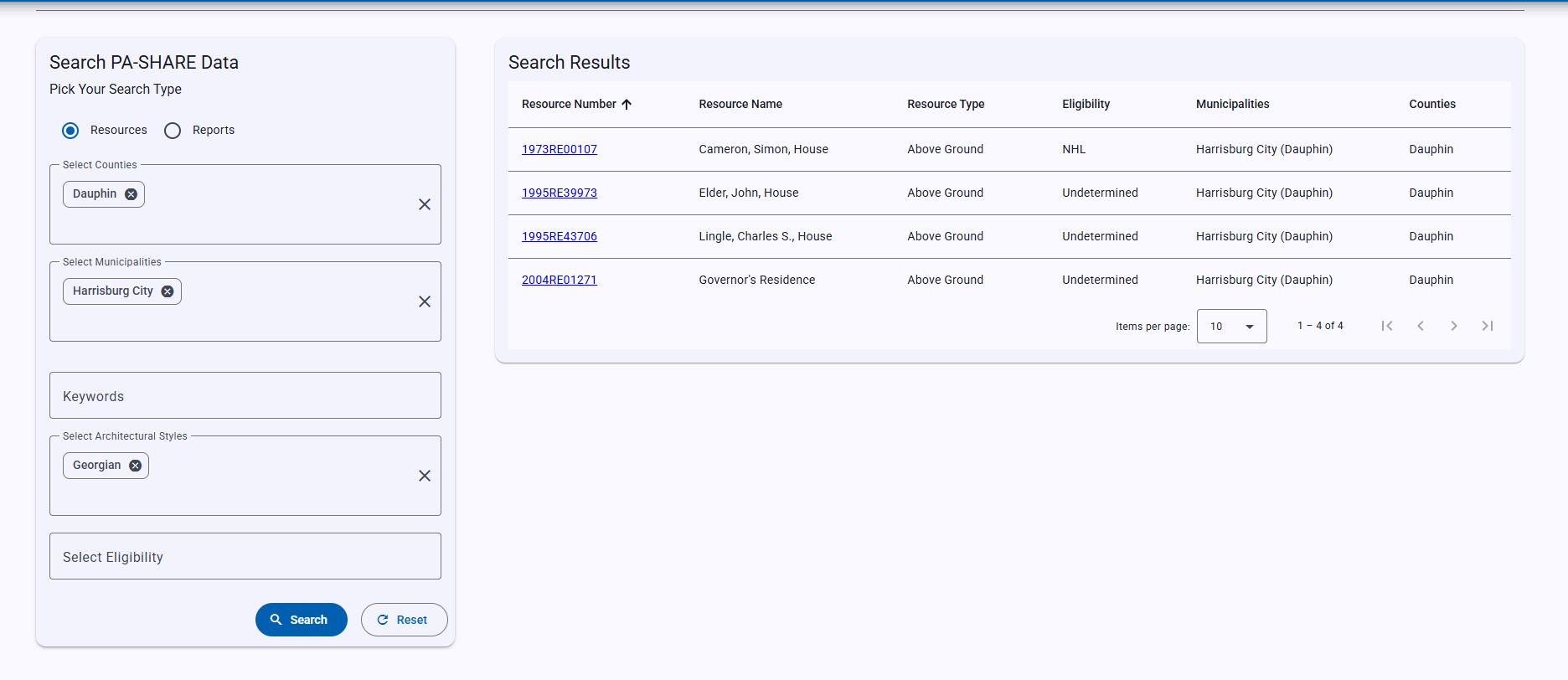
PA-SHARE SearchLite interface illustrating how to conduct a resource search.
A list of results will appear in the Search Results section of the screen. Selecting the Resource Number opens the limited resource details page. The SearchLite Resource details page includes all data fields available to our Guest and Basic PA-SHARE users.
This page also includes a unique static URL that be used to share out resource information and resource attachments. Attachments are available for any individual National Register Listed or NHL property.

The SearchLite Resource details page includes the same information available to our Guest/Basic users in PA-SHARE. Each SearchLite Resource Details page includes a unique static URL that can be shared to provide easy access to the resource details and any publicly available attachments.
When searching for a report, you can search by county/municipality, keywords (including the report title, author, and PA-SHARE Report #), and/or report type.
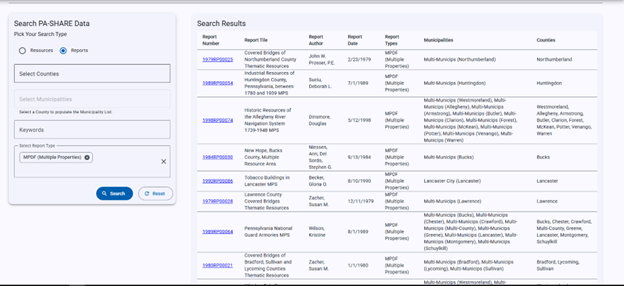
PA-SHARE SearchLite interface illustrating how to conduct a report search.
A list of results will appear in the Search Results section of the screen. Selecting the Report Number opens the report details page. This page also includes a unique static URL and can be used to share report information and attachments. Attachments are available for historic contexts and MPDFs.
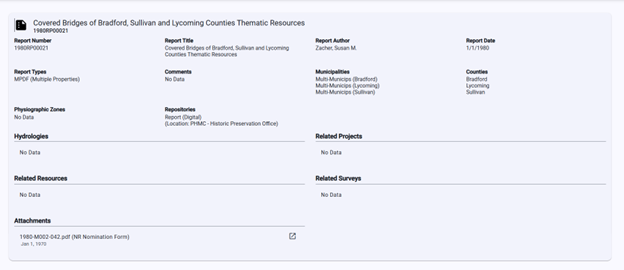
The SearchLite Report details page includes the same information available to our Guest/Basic users in PA-SHARE. Each SearchLite Report Details page includes a unique static URL that can be shared to provide easy access to the report details and any publicly available attachments.
Updates to Search
Increase Search Limit to 30,000 Results
Previously, PA-SHARE searches were limited to returning 10,000 results. We have increased that limit to 30,000 results; this limit was set to still take into consideration overall search performance while providing the option to complete wider searches. The 30,000 results limit applies to each available record type in PA-SHARE (Projects, Resources, Surveys, Reports, Markers), allowing for total results to be greater than 30,000 if applicable.
The 30,000 results limit is also now clearly indicated on the Search page at the bottom of the Quick Search section, and if your search reaches that limit you will receive an alert.
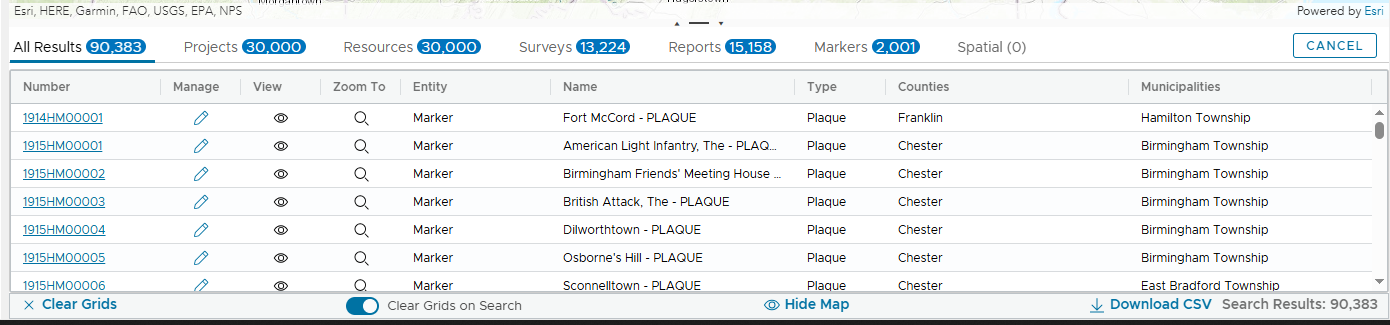
This search reached the 30,000 result limit for both projects and resources.

When the limit is reached, an alert banner will show at the top of the PA-SHARE page.
Defaulting Results to Match the Category Searched
When searching for a specific record type, the results grid will automatically default to that search type. For example, if you are searching for Markers using the Marker Criteria Search tab, the results grid will automatically show the Markers results tab when the search is complete. This aims to eliminate confusion when a search seems to result in no data when they are actually on a different tab.
Ability to Cancel a Search and Hide the Map
There are two new buttons available within the results grid section on the Search page. You can “Cancel” a search to quickly terminate a search that might not be correct or complete. A canceled search will also include an alert to confirm that the search was cancelled. You can also opt to “Hide Map.” This option provides an enlarged results grid.
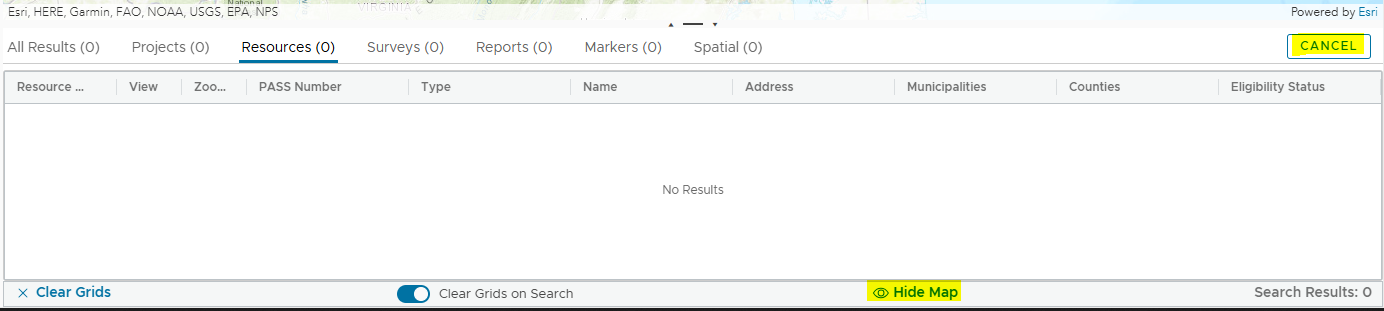
Two new buttons are available within the Results section of the Search Page. The Cancel button in the top right corner will terminate a search. The Hide Map button in the lower middle will automatically hide the map and enlarge the results grid section.

PA-SHARE alert for a cancelled search. Please note that results that might have already been loaded might still populate to the results grid.
Attachment Types and Access
Attachment Types List
We have refined the Attachment Type list to make it simpler to select an appropriate attachment category when uploading documents for SHPO review. The previous list included several legacy values that created confusion and inconsistencies.
When selecting the attachment type for your document, please select the attachment type that best represents the information you are uploading and provide a clear attachment name and description as needed.
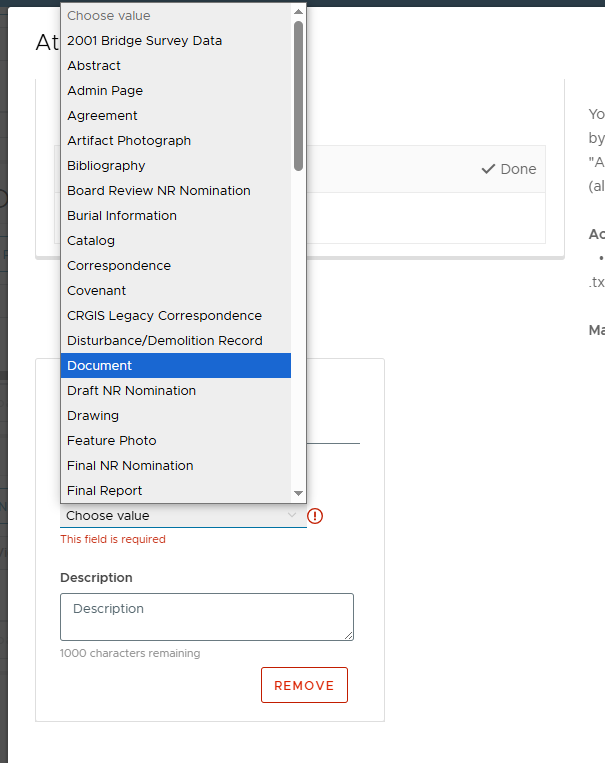
Reduced list of available Attachment Types. You no longer have to scroll through a long list to find the appropriate option!
Attachment Visibility
All attachments on National Register Listed and NHL properties are now available to our Guest/Basic users. Previously, only the formal NR Nomination Form was available to our Guest/Basic user. This occasionally caused problems when the form had been split out into its parts, restricting elements such as the Inventory or photos from our Basic/Guest users.
PA-SHARE now uses the individual eligibility of the resource to determine if any attachments are available to the Guest/Basic user. This change to attachment visibility still only applies to resources that are NR listed or NHL. For additional information about access to attachments, please see our Options and Subscription page.
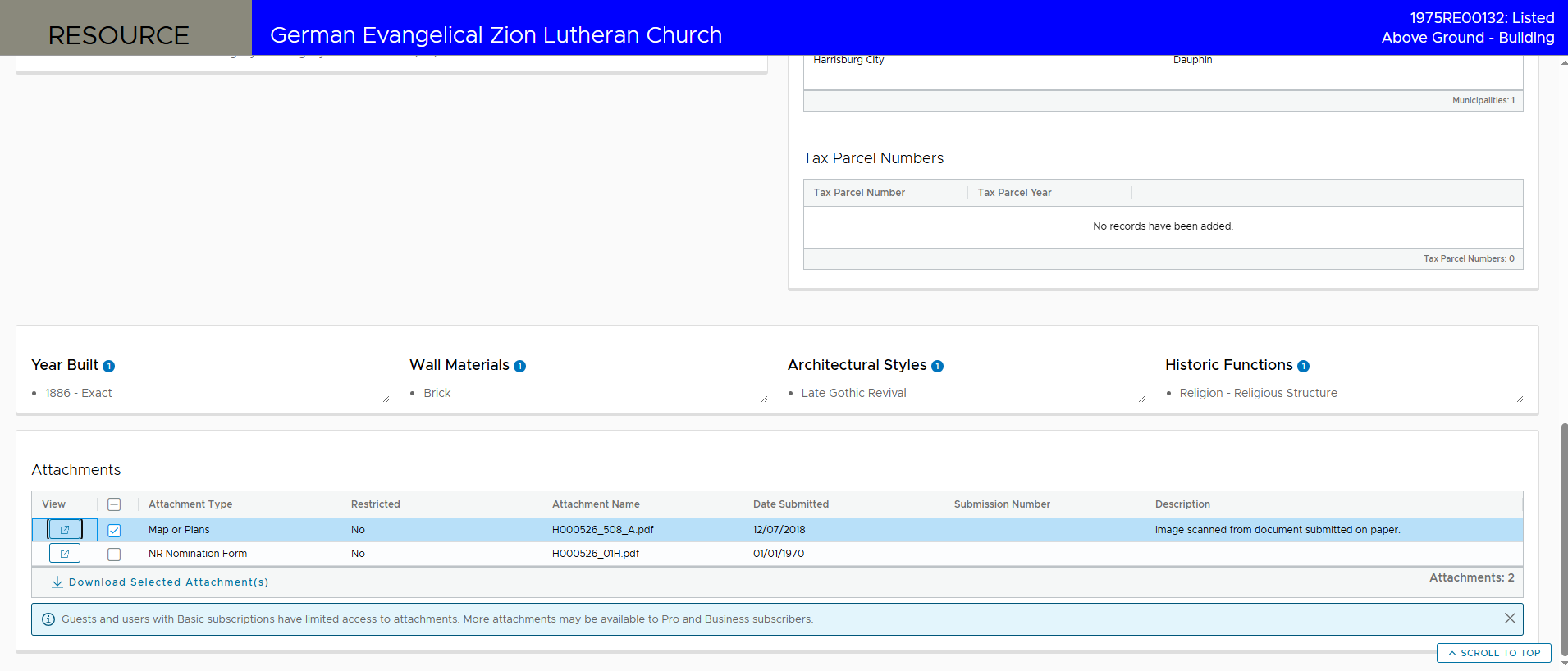
This listed resource now includes both the NR Nomination Form and an attachment with maps as publicly accessible attachments for all PA-SHARE users. Previously, only the NR Nomination form would have been available to our non-subscription users.
Photos
The photo gallery tab now includes a number indicator of if there are photos and how many. The photo tab is available to all users on Projects, and to Pro and Business users on Resources. We have also improved the loading performance for photos. Once the photos have loaded once, navigating between tabs will not force the photos to reload. We hope that this makes accessing resource and project records easier!
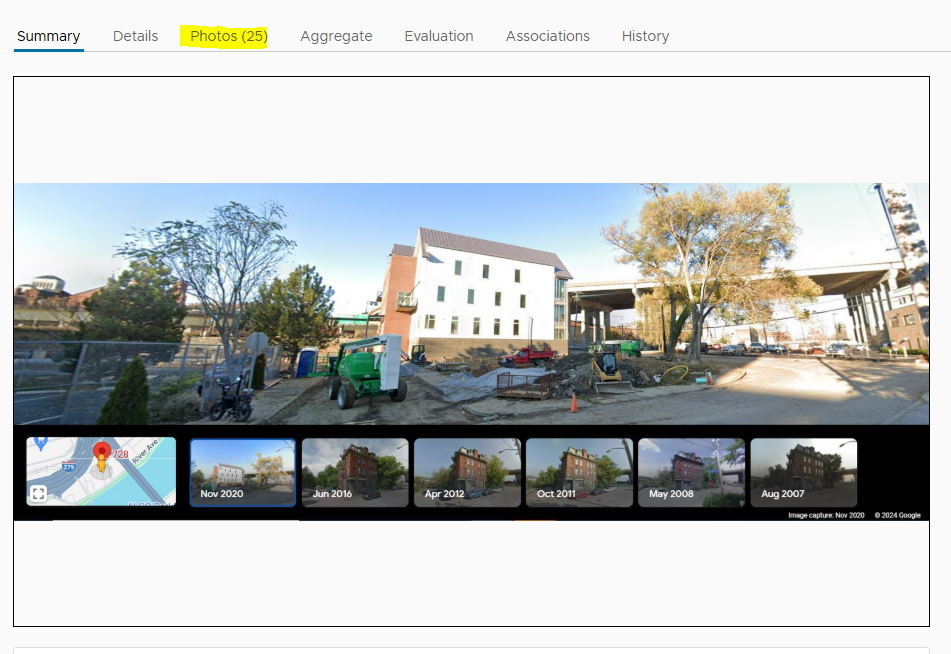
Note that a number is now included in parentheses on the Photos tab. This record includes 25 photos that can be viewed in the gallery format by navigating to that tab.
PA-SHARE 2.0 work will continue through this summer. Look out for future blog posts summarizing our final enhancements! As always, if you have any questions or problems with PA-SHARE, please contact the Help Desk at pashare@pa.gov.









Recent Comments